
72 Ferry Road, Southport QLD 4215
72 Ferry Road, Southport QLD 4215
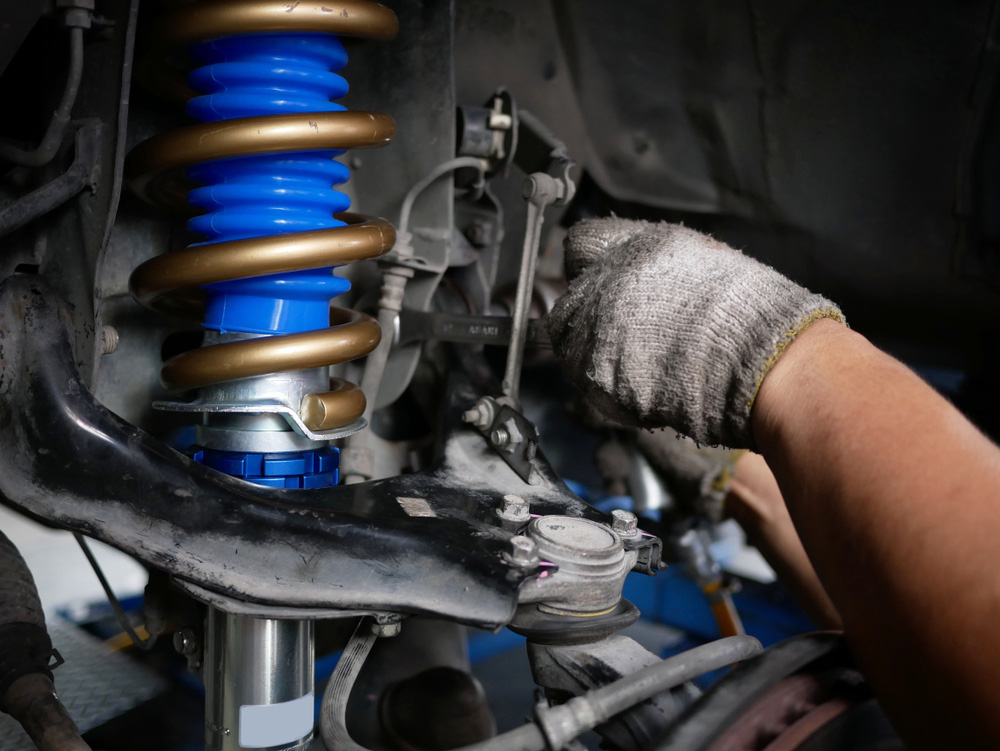
Towing changes how your vehicle behaves on the road, and getting your suspension right matters more than most drivers realise. When it comes to towing suspension, Gold Coast drivers need an upgrade that restores stability, protects the vehicle and keeps it within legal load limits, whether you’re hauling tools to a job site or towing a van up the coast for a family trip.
Most vehicles leave the factory with suspension tuned for unladen driving, not for the extra mass a loaded trailer puts on the rear axle. Once you add a tow ball weight, several issues tend to show up at once:
A vehicle that constantly tows near its limit needs suspension built for that load, not suspension designed for the occasional empty run to the shops.
This is especially noticeable on regional Gold Coast roads, where uneven surfaces, loose gravel and steeper hinterland climbs put extra strain on a rear end that’s already working harder than it was built for, particularly on longer trips.
Heavy-duty springs are one of the most common towing suspension Gold Coast drivers fit when they’re regularly hauling trailers, caravans or work gear, helping in a few key ways:
For vehicles fitted with leaf springs, a similar issue can show up over time as a rougher ride, noise or sag. Leaf springs can often be reset or replaced rather than swapped for an entirely new system, which is worth checking before committing to a full suspension overhaul.
Whether your setup uses coil or leaf springs, matching the spring rate to your typical towing load is the starting point for a stable, predictable tow. The right spring rate also depends on what you’re driving.
A dual-cab ute carrying a heavy trailer needs a different setup to a wagon or van towing a lighter camper, so matching springs to both your vehicle and your typical load avoids over-stiffening a ride that doesn’t need it.
Airbag suspension is a popular suspension upgrade for towing because it gives you adjustable support rather than a fixed spring rate. The benefits include:
Because airbags can be adjusted to suit how heavily you’re loaded on any given trip, they work well for drivers who tow occasionally as well as those who tow every week.
It’s also worth checking that your towbar and coupling are rated for the load you’re carrying, since even a well-supported suspension setup can’t compensate for towing gear that’s underrated for the job. Airbags can be fitted alongside factory suspension or combined with upgraded springs, depending on how often and how heavily you tow.
Shock absorbers control how your suspension reacts to bumps, braking and cornering, and worn or stock shocks tend to struggle once a trailer’s weight is added:
Pairing new shocks with the right springs or airbags gives you a more complete towing setup rather than addressing one component in isolation.
Suspension upgrades aren’t just about comfort. They also play a part in staying within Australia’s towing regulations, starting with a few key terms worth understanding before you hitch up:
It’s worth noting that suspension upgrades and towbar fitment are assessed separately under different standards, so confirming both with a qualified mechanic is the safest way to avoid gaps in coverage. An unsuitable suspension setup can quietly push you over your legal limit even if the trailer itself seems within capacity.
As a general guide, tow ball weight typically needs to sit at around 10 percent of the trailer’s total loaded weight for most Australian-made trailers and caravans, though this can vary depending on the trailer’s design. Getting this balance wrong affects more than comfort, it can make a trailer harder to control at speed.
Suspension upgrades won’t change your vehicle’s legal GVM or GCM ratings on their own, but they help you carry your legal load safely and predictably rather than running an overloaded or poorly supported rear end. If you’re unsure of your vehicle’s ratings, they’re listed on the compliance plate and in the owner’s handbook.orber replacement and load-rated upgrades, can significantly improve towing confidence and control.
There’s no single upgrade that suits every towing situation, and the right combination depends on a few factors:
A tradie carrying tools and equipment five days a week has different needs to a family hitching up a camper for a few trips a year, so matching the upgrade to actual towing habits matters more than chasing the biggest setup available.
It’s also worth reviewing your setup again if your towing habits change, such as taking on heavier work loads or upgrading to a larger caravan, since a suspension setup that suited last year’s trailer might not suit this year’s. A professional inspection is the easiest way to confirm what your current setup can and can’t handle, rather than guessing based on how the vehicle feels on the road.
Getting your suspension right before a big tow makes the difference between a stable, controlled drive and a stressful one, and it’s far easier to sort out before you’re loaded up than to troubleshoot a problem mid trip.
At GC Suspension, Steering & Brakes, we specialise in towing suspension Gold Coast drivers can rely on. Get in touch to have your towing setup checked before your next trip.